 |
 |
 |
 |
|
|
|
|
|
|
 If you're unsure
whether you are at a buddhist temple or a shinto shrine, look for a three
beam entrance called a torii, the top beam being wider than the legs, with
kanji characters across the top. If you see one in stone or wood, you are
at a shrine. If you're unsure
whether you are at a buddhist temple or a shinto shrine, look for a three
beam entrance called a torii, the top beam being wider than the legs, with
kanji characters across the top. If you see one in stone or wood, you are
at a shrine.
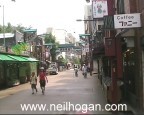
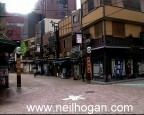
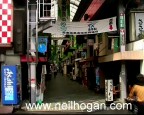
The shops around Asakusa are wooden and iron construction. Even though the new shops next door are concrete and steel, the old shops retain their old worldliness so, on the days when tourists are few and locals aren't being fashionable, you could believe you were still in the Edo period.
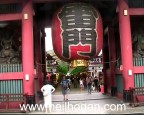
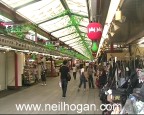
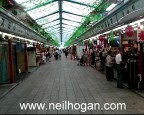
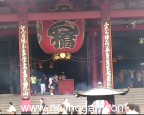
Behind the lamp, in front of the temple, between the various shops selling similar items, are many food places frequented by foreigners. Avoid these unless you need a menu in English. Locals will not go to these places. Behind the temple are many more restaurants and other eating establishments frequented by locals.
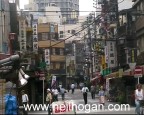
If you can avoid the tourist places you'll have more of a chance to explore real Asakusa. Due to my penchant for getting lost in the complicated and maze-like streets I was always stumbling across new surprises.
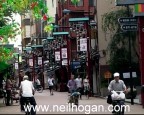
And, of course, the locals add to the flavour of Asakusa. Ladies wearing kimonos, salaryman in business suits on bicycles, teenagers with creative hairstyles and more. Asakusa is also the cheapest area to base yourself while you explore Tokyo. You can't find hostel, hotel or other accommodation as cheap anywhere else.
And if you're bored with the slowness of Asakusa, there's even a cruise you can take called Happy Dog Cruise, to take you away from it all and into the more exciting parts of Tokyo. |
|
|
|
|
|
|
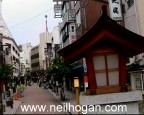 Asakusa is an aging but vibrant area of Tokyo. On many walking tours of
this interesting district I encountered old shops, older temples and an
eclectic mix of tourist and local shopping.
Asakusa is an aging but vibrant area of Tokyo. On many walking tours of
this interesting district I encountered old shops, older temples and an
eclectic mix of tourist and local shopping.
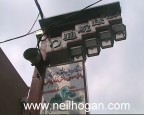
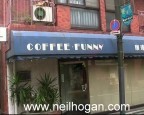 There are
some amusing names for the newer shops. Coffee Funny is probably my favourite.
I'm sure you'll find others.
There are
some amusing names for the newer shops. Coffee Funny is probably my favourite.
I'm sure you'll find others.
 I had the
chance to visit one restaurant which was full of retired Japanese Gentlemen,
drinking at 10am. There I was seated at a table with 3 other men and served
hot sake and 2 large whole oil-cooked sardines, with various condiments.
An excellent breakfast.
I had the
chance to visit one restaurant which was full of retired Japanese Gentlemen,
drinking at 10am. There I was seated at a table with 3 other men and served
hot sake and 2 large whole oil-cooked sardines, with various condiments.
An excellent breakfast.
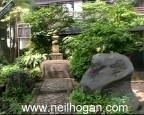
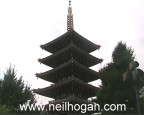 A tiny temple
here, a small shrine there, a shop specialising in vinyl records, an underground
bicycle park, even a giant plastic flame next to the Asahi building on
the river is enough to add a surprise to the journey.
A tiny temple
here, a small shrine there, a shop specialising in vinyl records, an underground
bicycle park, even a giant plastic flame next to the Asahi building on
the river is enough to add a surprise to the journey.
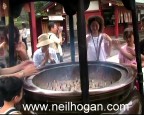 There's also
a certain atmosphere about Asakusa. Because it is like stepping into the
past in some places, the atmosphere is a lot more relaxing than in Shibuya
or Shinjuku.
There's also
a certain atmosphere about Asakusa. Because it is like stepping into the
past in some places, the atmosphere is a lot more relaxing than in Shibuya
or Shinjuku.